Sunday, November 26, 2006

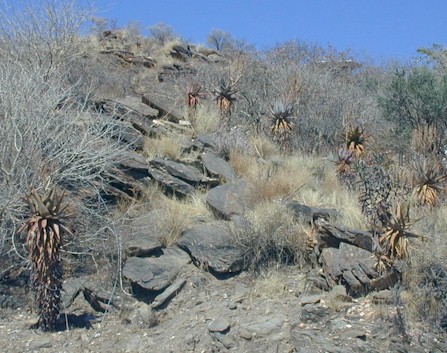
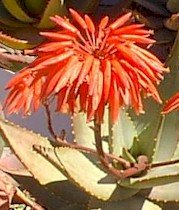
Aloe asperifolia and the salt road along west coast Namibia.  We are on our way to see the desert aloe Aloe asperifolia. Driving along the salt road to Swakopmund and on to Walvis bay where we saw a large crane trying to pull out a stranded fishing boat.
As to the salt road. It is really made of the salt from the salt pans which are plentiful along the west coast. The gypsum, which is one of the components in the salt binds with the sand, the salt as such helps to catch the water from the fog that keeps the mix from drying out and form a hard crust. It is a good road to travel on, like a tar road. This road can not exist where it rains or where the air is dry.
We traveled from Windhoek to Karibib, visited the cemetery at Usakos and took the turn-off into the dust road. That took us to Henties bay, from there along the salt road to Swakopmund and tar road to Walvis bay


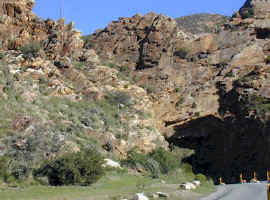
Karibib - can you believe that quiet street? I am standing in the main road taking this photo. This is the main road down to the coast, so there are often cars travelling through and some people on the main road at the few shops. There is one shop that we do not pass when we are in Karibib and that one sells gemstones and rock crystals. It looks like nothing from the outside, but inside it is huge with the things that glitter which stops a woman's heart. sighhhh


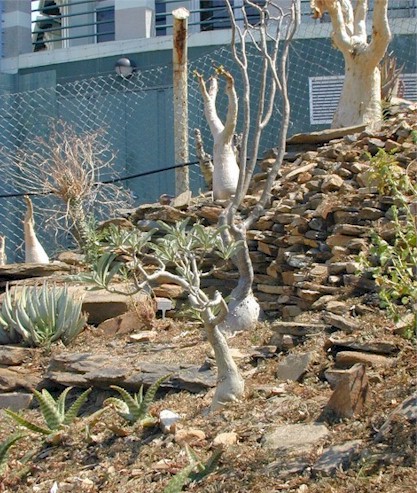
 I need some information here regarding the photo (above).  Please take a close look.  The large obvious plant without leaves is a Cyphostemm species, I want information on the plant with the thin branches next to the Cyphostemma. The plant with the thin long greyish branches and pretty seedpods which look like wings of a bird flying. Those pods are large. One pod is nearly the length of my hand.  In the background is the Karibib police station.
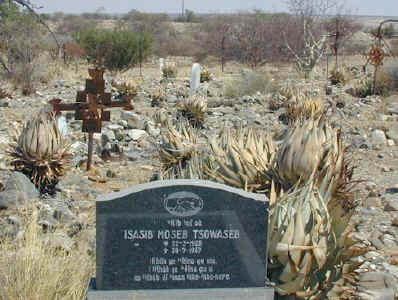


At Usakos the plants were dry with no sign of the wide spread rain that fell in the rest of the country. The Aloe hereroensis in the old cemetery were not in flower like Aloe hereroensis in the southern areas of Namibia. Some of the aloes showed a faint green coloring in the center of the rosette assuring me that these aloes are tough, they will survive.


The dust road to Hanties bay. The grass fields in the desert are unbelieveable !  We never saw so much grass in the desert before. The local habitants (mainly small animals and insects) did not experrience this in a century.
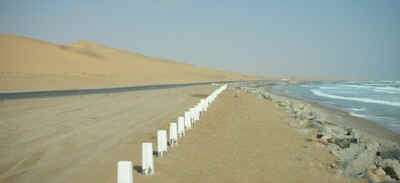


The main road between Swakopmund and Walvis bay. Lovely picturesque dunes.
Below:- The crane pulling the fishing boat out of the sea. The fishing boat is past the point of seafaring ever again, it will be sold as scrap.
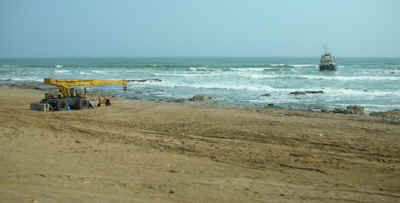


Imagine what it would have been like centuries ago to land on this shore. Nothing but large dunes. Not altogether so bad as the mouth of the Swakop river is less than 5 kilometres away. Skeleton Coast starts to the north, but anybody shipwrecked would not be able to get far without water on this coast, even if they are not yet in the skeleton coast area.
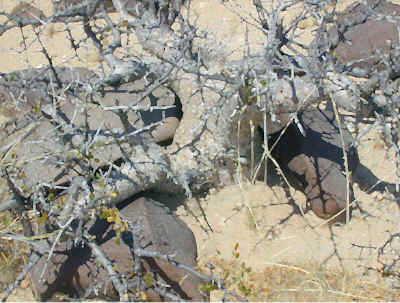


One of the trees adapted to the life in the desert. The branches are not higher than 40 cm at the most and the diameter of the tree with all branches included is not quite 2 m. but the tree is actually larger as the main stem is underground like a huge water reservoir.
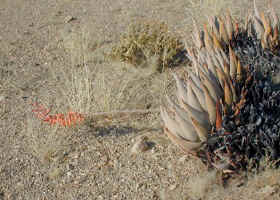


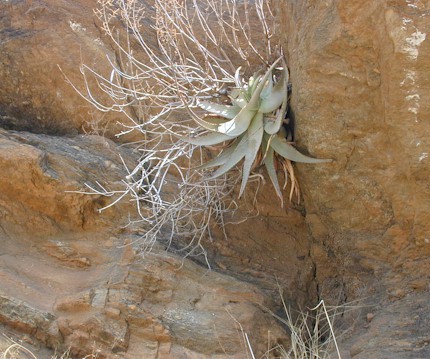
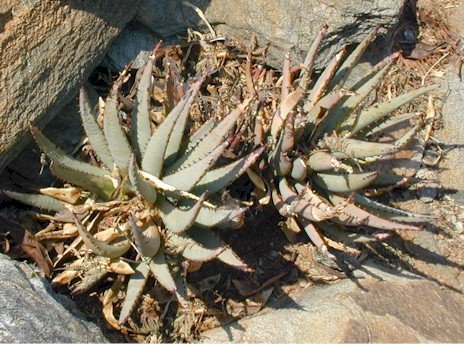
Aloe asperifolia can survive the desert habitat very well. The plants are in excellent condition with the pale green plants showing new growth. The thick leaves are full of moisture which are absorbed dew or fog from the sea-air.
Most plants have bloomed out. The single raceme with flowers that we saw was very small and not much to look at. It happens that aloes send out a sub-standard raceme after it bloomed. It shows the typical sideway growth of the inflorescens.

Sunday, November 19, 2006

Windhoek Namibia

aloe littoralis the pride of Windhoek Namibia. Aloe littoralis is on the emblem of Windhoek city. Aloe littoralis is a tall tree aloe hardy from below freezing to sizzling summer temperatures. The outstanding point about Aloe littoralis for the garden is that it blooms from a young age.
Windhoek is the capital city of Namibia. This neat clean city without smog, is situated between mountains on an uneven hilly terrain. Wild animals like the Kudu, jackal and different small mongooses can be seen in the hills around the city, especially in times of drought.


The habitat of Aloe littoralis is North- western  Province of South Africa, all the way up through Namibia up to Angola, to the east into Botswana and a short distance into the northern Province of South Africa. Photo below shows the dry winter scene in Namiba. Aloe littoralis blooms early winter before frost can damage the blooms and seeds.


A visit to the botanical garden in Windhoek is certainly worth the effort for succulent plant enthusiasts and anybody who would enjoy to see the endemic trees and rare plants of Namibia. The botanical garden covers a large area over the hill with walking trails.


Aloe dewinterii planted in the botanical garden the same way as it grows in the natural habitat - hanging from cliffs.

Windhoek.
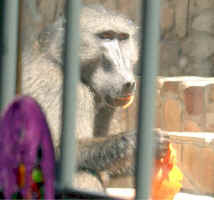
The baboons tend to be a dangerous nuisance. They are cute to look at, but they can attack and the males are large enough to kill a human or dog. The photo below is from a large handsome male who saw the ripe papaw in the garden and decided that it was just what he wanted. We did not want to agitate him so we took the photo through the kitchen window. This gives the impression that he is behind bars, but we were strictly speaking behind the bars not him.


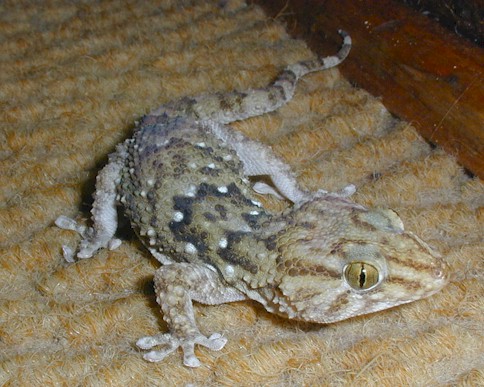
The wild life in and around Windhoek includes many cute animal like this gecko.


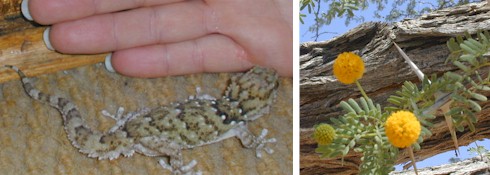
Gorgeous little fellow. Those large eyes are handy for his nightlife adventures. He can run on the ceiling by tiny slits under his feet that form a suction on the substrate. His feet feel like velvet if he is on your hand. I do hope the old tale that they are poisonous has been cleared in modern times. He will hiss to try and defend himself and his bite feels like a soft pinch. It does not even leave a red mark, far from drawing blood, let alone the ridiculous poison tale.  My guess is the hissing reminded people of a snake and from there the poisonous tale.


The little gecko will run if he is on a wall but on this carpet he thinks that he will disappear like when he is on the bark of a tree, so he remains still. This works out fine in nature on a camelthorn tree but at night on a carpet some-one will step on him. Consequently any gecko on the carpet, no matter how cute he looks, is put outside.

Friday, October 06, 2006

Aloe dichotoma and Aloe hereroensis in the southern Namibia. All endemic aloes are strictly protected in Namibia.
Namibia has only 2 seasons, a long hot summer and a short cold winter. It is now September which should be spring, but here that is no option. The dry heat is not as depressing as humid heat of tropical countries, but the hot day temperatures reach dangerous levels in the sun.
Namibia has 27 endemic aloe species. The habitat of some of these aloe species go over the borders into the neighbouring countries as plants do not grow inside political borders, but there are aloe species with a very small habitat inside Namibia only.
This was not a tour to see all the aloes of Namibia, but a quick trip up to Windhoek with a day trip to Swakopmund visiting family. It is a pity that time was short.


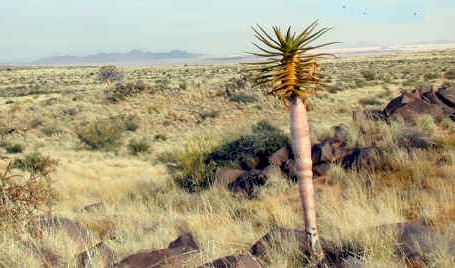
The dry semi-desert southern part of Namibia is the habitat of Aloe dichotoma.
It was exhilarating to find such a healthy young Aloe dichotoma tree. Very few seeds reach this stage. The photo below shows an old tree with dead branches - battle scars dealt out by nature.


An Aloe dichotoma garden with pelargoniums and mesembs at a petrol garage with Bed&Breakfast bungalows at the small town, Gruenau. It was a pleasant surprise to find the petunias in bloom protected by some reeds on the other side of the Aloe dichotoma garden. The dry hot day temperatures scorch anything that is green and yet here are these fragile flowers growing happily.


The distance from the border to Gruenau is 120 kilometres and to the next town Keetmanshoop is 146 kilometres. Few tourists do not stop for petrol here, which is just fine for al concerned in this lonely location. (petrol = gas in the USA)

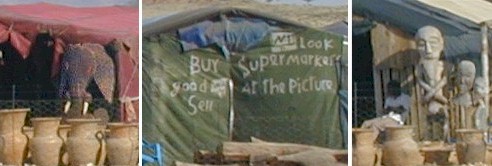
Informal shops catering for tourists, at the roadside opposite the Bed&Breakfast. Never be out in the midday sun over here. Note the barren mountains in the background.


The elephant is astonishingly realistic. I hope that the pile of hardwood for sale as well as the carved animals and figurines are from dead trees. Namibia has a very low supply of hardwood trees. The Camelthorn tree is very hardy but in a harsh climate it grows slowly.
The seedpods and seeds of most Acacia trees are edible and used as fodder for farm animals. (The wild herbivores appreciates it too). We saw many small stalls alongside the roads where people were selling bags of Acacia pods in the central parts of Namibia.


There are a few very special and rare aloes in the southern regions of Namibia. We did not have time to drive out to Aus but I would like to mention Aloe pachygaster. I took some photos of this aloe in the botanical garden in Windhoek.
Aloe pachygaster grows in the most harsh conditions in Namibia. Aus is the coldest place in this country with freezing winters, even snow. This should be good news to aloe enthusiasts in the cold countries. There is no need to bring Aloe pachygaster inside in winter but keep this aloe out of rain all year round. Water it sparingly in autumn only.
for more photos and tips see my web site


Aloe hereoensis in bloom a few kilometers past Keetmanshoop on the way to Mariental.

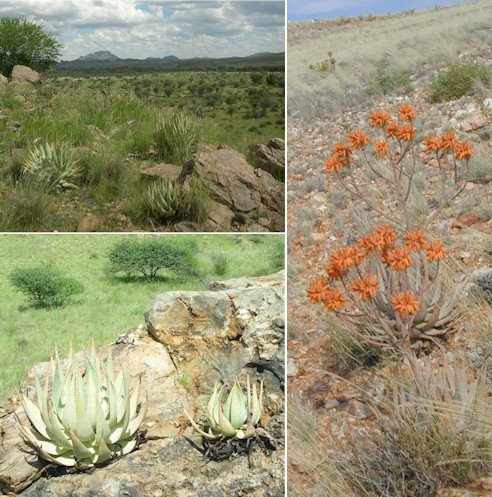
Aloe hereroensis has a wide distribution throughout Namibia to the neighbouring countries. Photos below left were taken during the good rains in the beginning of the year 2006. Photo right were taken in September 2006 - the aloe plants are in bloom and the grass so green on the photo left are now dry with the seeds blown away by the wind.


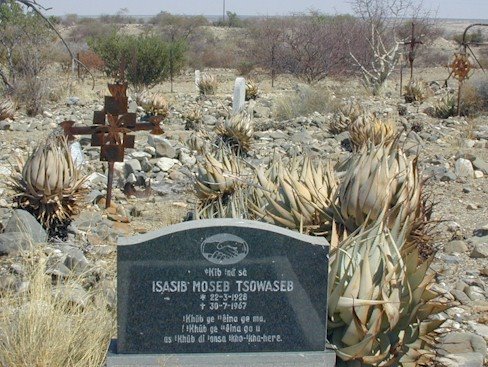
Aloe hereroensis in the old cemetery of Usakos. We expected them to be in flower, but although they showed some new growth, the rain was obviously not enough.


Saturday, September 02, 2006

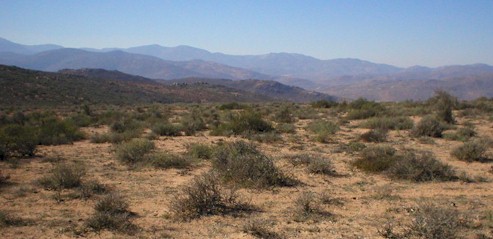
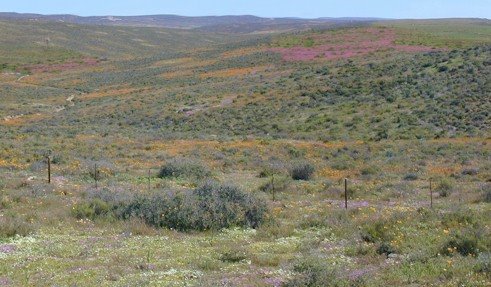
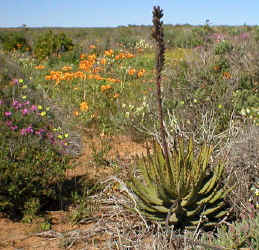
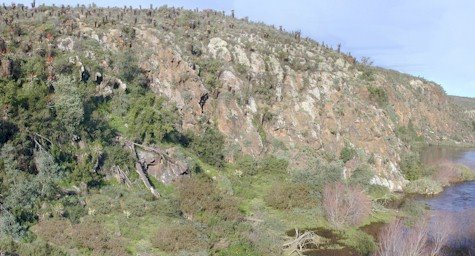
Aloe habitat and wild flowers in Namaqualand

photo above: Namaqualand in summer above


Namaqualand in the winter with splashes of purple mesembs and orange daisies

Most people know Namaqualand as a large flower garden in winter, but that is just one side of the plant world in this part of South Africa. The flowering time last 3-4 months of the year if the flowering time of all the lilies and other plants are included with the daisies and mesembs. All plant life seem dry or dead in dull shades of brown the rest of the year, but most succulent plants are alive in a dormant or semi-dormant state.

I want to show a few photos of Namaqualand (Namakwaland) which are not often seen. Flowering plants and lilies which do not grow in large masses and which are overlooked in the veld with a few photos of the small inhabitants.

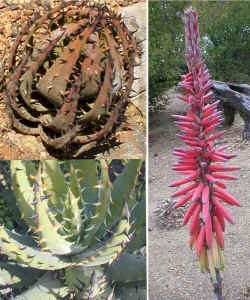
One of the aloes growing in this region is Aloe melanacantha. Aloe melanacantha is impressive with large black thorns on both side of the leaves for protection. The raceme is long with dark pink flowers.


Aloe melanacantha with seedpods. Most of the seeds were damaged by the larvae of insects eating them. No food is wasted - the dry season with little to eat is very much longer than the season of plenty.


Photo left:- Aloe melanacantha plant curled up in drought and below the plant opens up in the rain season showing new growth with white thorns. On the right is the long raceme with dark pink flowers fading colour as they open
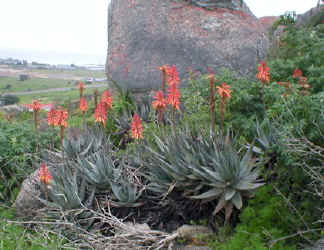


A grasshopper on an Cleretum sp., ice-plant.


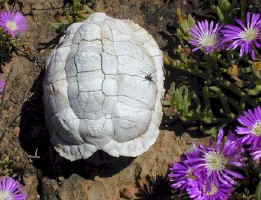
Life goes on. We saw these tortoise skeletons some distance apart, while walking in the veld, August 2006. The skeletons had no injury marks on them which would suggest that the animals died as a result of the drought before the rain season started.


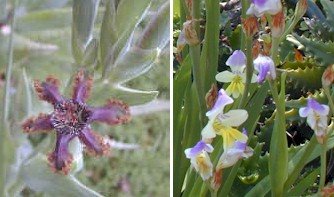
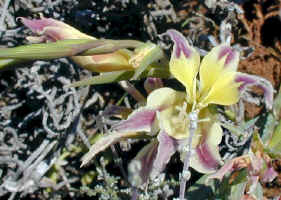
Three of the many beautiful lilies. Above left is a Feraria species and right is Synnotia variegata which is a Gladiolus species. Below is Gladiolus orchidiflorus.


Photo left:- The beetle-daisy invites the beetles with markings on the flowers which resemble beetles. The beetles pollinate the flowers when they visit for nourishment and also to meet their own mates.


In this dry climate where there are no flowers for near to eight months a year, beetles seem to be the main pollinators. The flowering season for the daisies is short. Competition to get pollinators are tough in good rain years when huge areas are covered in thousands of flowers. Any attraction out of the norm will give that plant's flowers an advantage over the rest.

Photo below left:- pretty glittering little lovebugs covered in pollen. They eat nectar which does not harm the flowers in any way. The small longhorn beetle on the photo right, eats the flower pedals, but that is not much for the flower to pay in exchange for pollination.


On the photo left is only one of the "living stones" succulents of the Conophytum species - Some plants in flower. The single plant is about the size of the tip of a lady's finger. The plants go dormant in the dry season protected by a papery covering, which slough off in the rain season as the plants grow and fill up with water. It is very difficult to see them when they are dormant. In the top left corner on the photo are some real stones.

Thursday, August 31, 2006

Aloe ferox medicinal aloe with photos
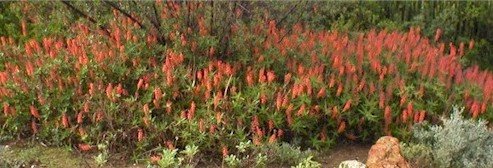
Aloe ferox has a very wide habitat distribution in South Africa where this aloe has been used for its medicinal qualities for millennia. Only the gel of Aloe ferox (or any other aloe) should be used by the novice. The sap or bitter yellow exude originating from the green outer cells, can be used for its purgative effects, but it is not recommended as there are better and safer laxatives available.


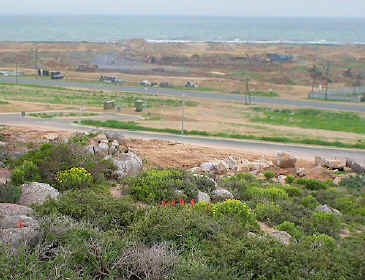
This scene is to the left of the Breede river photo above.


How to prepare the gel


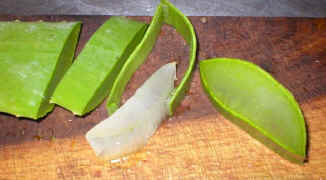
Cut the leaf in portions and peel off the green outer part. The gel is in the translucent leaf pulp. It is not bitter, in fact it is near to tasteless with only a slight "fresh" taste.

Fresh gel on the skin has a cool feeling. The gel is absorbed by the skin cells in seconds with only a thin silky layer that remains on the skin, giving the skin a
lovely silk smooth texture. The gel revitalizes the cells and the layer protects the skin on the outside.
Store the gel in an airtight container in the fridge for a few days only. It is better to freeze the gel in cubes for use and then remove a cube as needed.
The whole leaf can be stored in a cool dry place for a long time, even weeks. Cut off a portion of the leaf as needed.

The gel of most aloes (species or hybrids) can be used, but most aloes does not have much gel. Aloe barbadensis (known as Aloe vera) is well known for its gel. The gel is not as consentrated as the gel of Aloe ferox, but that does not matter. It is easy to cultivate Aloe vera from offshoots.
Aloe vera has been used for about 3000 years. The habitat of this aloe could be Arabia, but it has been cultivated for so long that the origin of this aloe has been lost in time.

Another South African aloe that is very good is Aloe maculata, also known as Aloe saponaria or the common name "soap aloe". The hybrid Aloe maculata x Aloe striata grows faster than Aloe maculata and it has the same high quality gel. The downside is that it is a much smaller plant than A.ferox or A.barbadensis, thus the gel is strictly speaking more expensive, but the gel is the best.

I take a teaspoon gel (mixed with any food or drink, it is tasteless) daily to build my immune system. I also give it to my pregnant cats in their food. I do not like to suggest anything to be taken internally, so please do it on you own risk. Do not take the green skin or sap! A quick rinse after you peeled the gel will remove the sap. A little sap would not hurt. If the gel taste bitter, then there is sap on it. eee-yuk .... do not believe the old tale that it has to taste awful to be good!


Aloe ferox is a large heavy aloe but it blooms from a young age at a relative small size. This easy growing aloe is an excellent focal point for a garden.


Saturday, August 05, 2006

Aloe framesii in bloom for the last time ?
Visiting Aloe framesii in bloom each winter and Aloe mitriformis each summer, was on our agenda every year for at least ten years. Aloe framesii blooms the same time as an assortment of winter flowering plants on a small hill in StHelena Bay.
StHelena Bay is on the south western coast of South Africa, where Vasco da Gama landed all those years ago, in his search for the southern point of Africa.


The outings to this quiet bay were always refreshing, but now there is a large wound in "our" hill! That is only the start, the whole hill has been cut up and sold for luxury holiday homes. The sea shore has been bull dozed together with many plants - mesembs, stapeliads, caudiciform plants, euphorbias and more. I do not expect propress to come to halt or something like that, but could Nature Conservation or some other organization not contact plant lovers to remove those plants first ? They fine people for removing plants, but bulldozing? Having said that, I am not going to shout around. My motto is if you do not like it, do something about it, or keep quiet. To tell the truth, I do not have the motivation to organize something so that plants could be saved in future. The people of this country seems to have so many problems, nobody wants more on their shoulders. There may be an energetic nature lover reading this blog who is willing to take on the challenge.


Looking down on progress. Many jobs are created and a lot of people need that badly. If I think of children and families having a better life then it eases the loss.


Aloe framesii in bloom. It is a lovely blue aloe. In the summer when all is dry it seems to merge into the blue granite rocks. In winter it needs to be seen by the pollinators and the flowers show off well.


Aloe framesii center front shared this hill with Aloe mitriformis to the back left and right. Aloe mitriformis blooms early summer and Aloe framesii blooms in winter which enabled the two species to grow side by side without hybridizing.

Friday, July 14, 2006

A visit to the Karoo Botanical Garden in Worcester, South Africa.
On our way to the Small Karoo we made a quick stop at the Karoo Botanical Garden in Worcester. No way that we can drive past our favourite garden. As it is, we travel the 250+ kilometre(there and back) to the garden so often, they know us by name.

Photo left shows a very small portion of the botanical garden. I like this portion, it has a natural look and atmosphere. The syphostemmas with their fat naked stems and branches held up towards heaven, always catch my eye. The small flowers blooming between the large plants are gazanias. The very high tree aloe is Aloe barberae.


Something special amongst the aloes was the white Aloe ferox photo left and the red Aloe tenuior bush in flower photo below.
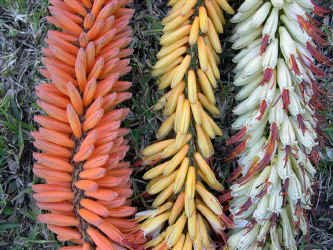
A white aloe ferox is scarce. The white Aloe ferox flowers become much lighter as they open and the antlers are maroon-black. A very nice contrast. see photo at the bottom.
Even with seeds from two white Aloe ferox plants, the chance of getting white is very small. It is better to have Aloe ferox with different color flowers growing together and pollinate them all with each other. Then sow 100-200 of those seeds and maybe you will get a few of them blooming white


red Aloe tenuior bush


photo left:- Alexandre ViossatThis photo was not taken in the Karoo Botanical Garden. Alexandre Viossat kindly permitted me to place the photo to show some of the different natural colors in Aloe ferox. These colours were not cultivated, the colours occur naturally in the very large Aloe ferox habitat.

Sunday, July 02, 2006

This excursion into the small Karoo is once more into the drier parts of the country to see some succulents. We were heading for Montagu.
The Klein Karoo will make the heart skip a beat of any person who loves succulent plants.
Kogmanspass is just a short tunnel through the mountain. Remarkable as it was built by hand 1876 - 1878

Geological history Kogmanskloof passes through folded layers of the table mountain sandstone in the Langeberge mountains. Rivers deposited the sediment of which these rock were formed along a coastline some 400 to 450 million years ago. Then about 280 million years ago compression forces in the earth's crust began folding the beds for the next 60 million years. Upon this followed forces which formed large crustal fractures roughly parallel to the present coastline. One of the largest of these, the Worcester Fault passes near the southern entrance to the kloof and displaced beds to the south of it downward by several kilometers. Kogmanskloof is but one of several deep gorges carved through the tough sandstone of the table mountain sandstone by the erosive action of swift flowing rivers for millions of years.


The view immediately out of the tunnel into the Kogmanskloof gorge.
It was a lovely winter day. This very hot region is greener in winter than in summer. As on most of our winter trips, the misty weather was not very good for photos but very much better than the summer heat for walking and climbing.

Rudi loves the climbing.  As geologist he is used to climb over rocks just to see what is on the other side of the rock.

photo below:-
The aloes on the slopes are Aloe comptonii.


The very short capitated racemes of Aloe comptonii The leaves are broad and short with blunt teeth.